

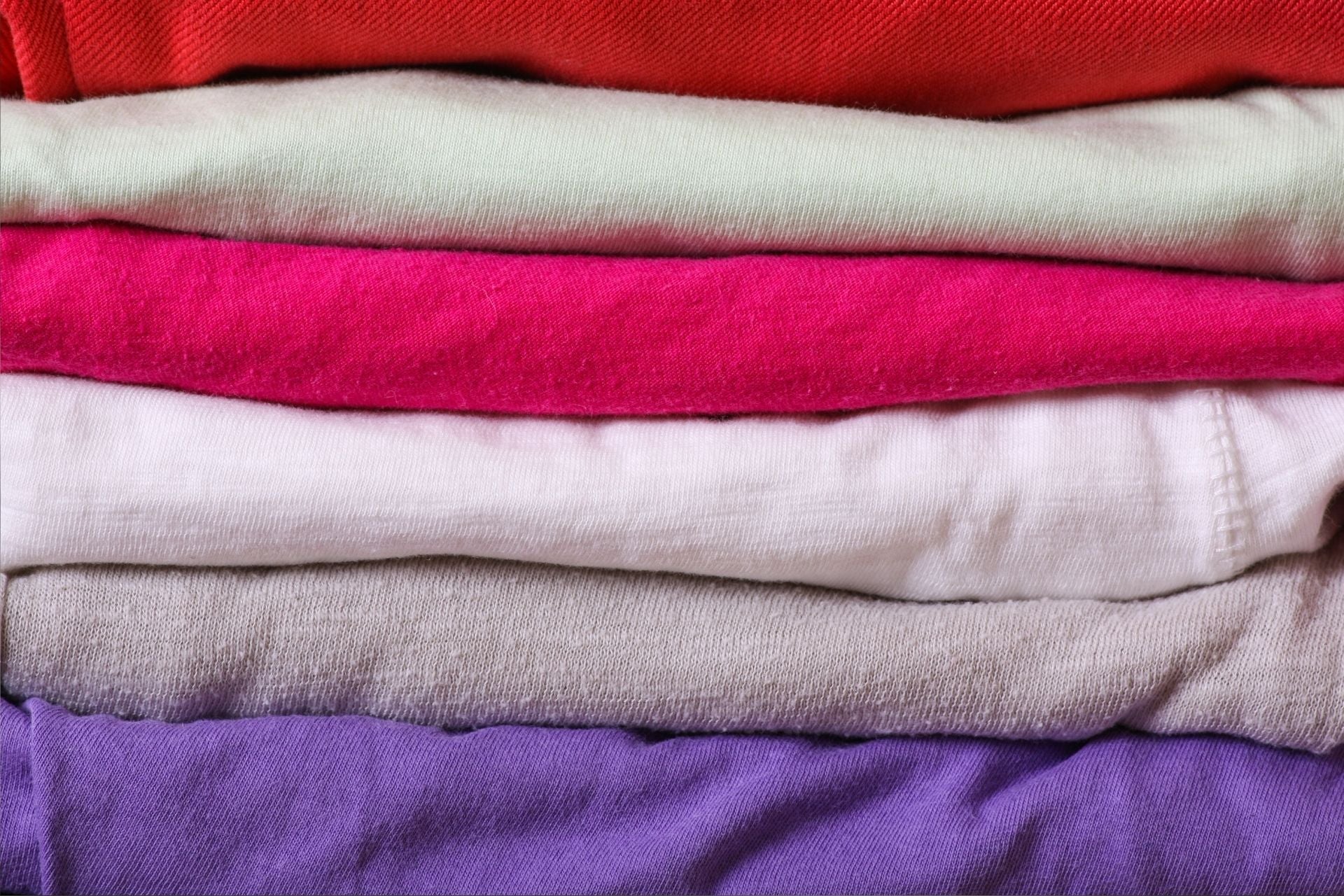
The material a cleaning cloth is made from determines how it performs on the job. Not the price per kilo. Not the brand name on the bag. The fibre type and the weave weight set the absorbency, the lint output, the durability under solvent contact, and how quickly the cloth falls apart. Most suppliers gloss over this entirely.
Cotton
Cotton is the most common base material in industrial cleaning cloths, and the reasons are not complicated. It absorbs well, tolerates machine washing, and holds up to most industrial solvents without degrading quickly. Within cotton, though, the weave weight changes everything.
T-shirt cotton is lighter and more flexible. Good for wiping tools, applying solvent to a surface, or working in tight spaces where a bulkier cloth would not fit. Towelling cotton is denser. The looped construction on both faces holds significantly more liquid per pass. Put a towelling cloth on a hydraulic fluid spill alongside a t-shirt cloth of the same size and the towelling cloth wins by a clear margin. That gap matters in a busy workshop.
Red Rose white cleaning cloths start at £12 for a 5kg box in t-shirt weight, with towelling options from £13 for 5kg. For most engineering, automotive, and agricultural applications, cotton in one of these weights handles the job without needing anything more specialist.
Recycled Textiles
A large proportion of industrial cloths are made from reclaimed fabric. This is not a downgrade from virgin-fibre cotton. Post-industrial textile waste is graded and sorted before cutting. The fibre is the same as new cotton. It has just already been used in a garment first.
Sweatshirt cloths are the clearest example. A 10kg box of recycled cleaning rags from Red Rose contains approximately 90 cloths and costs £11. Sweatshirt fabric has a looped interior that absorbs well and an outer face that moves cleanly across machinery surfaces without snagging. For high-volume engineering and workshop use, that combination at that price is hard to match.
The environmental case is straightforward. Every kilo of reclaimed textile in a cleaning cloth is a kilo diverted from landfill. Red Rose has been sourcing and processing reclaimed textiles since 1986. For businesses with ESG targets or supply chain sustainability requirements, switching to recycled cloth is a quantifiable improvement, not a symbolic one.
Are Recycled Cleaning Cloths as Effective as Cloths Made From New Material
For most industrial cleaning tasks, yes. Recycled cloths are graded before packing and the performance gap from virgin-fibre cotton is minimal in everyday use. Where it shows up is lint output. Some recycled mixed-fibre cloths shed more fibre than purpose-woven linen. If lint matters in your application, the linen range handles that. For everything else, recycled cotton performs well and costs less.
Linen
Linen behaves differently from cotton in one specific way that matters to certain industries. The fibre is naturally low-lint. Where cotton cloths shed fibre during use, particularly when they are new, linen releases very little. In glazing, printing, and any environment where a stray fibre on the work surface causes a quality failure, linen is the appropriate material. Standard cotton is not.
Red Rose white lint free cleaning cloths include linen in 5kg and 10kg options, both made from 100% recycled linen fibre. The low-lint performance comes from the material itself, not a surface treatment that degrades over time. At £13 for 5kg, linen costs slightly more than cotton. For a glazing operation where a single fibre under a sealed panel means reworking the installation, the cost comparison looks very different.
Towelling Cloths
Roller towelling was built for commercial washrooms: dense, looped cotton with maximum liquid retention per pass. In industrial use, that same construction makes towelling wipes one of the better options for heavy-duty absorption tasks. They hold more per pass than t-shirt cotton and do not break down quickly under repeated use and washing.
The trade-off is lint. Towelling fabrics shed more fibre than linen. For anything sensitive to contamination, towelling is the wrong specification. For general workshop use, automotive maintenance, and agricultural cleaning tasks, that is not a relevant concern. Towelling absorbs the spill and that is what is needed.
Does Colour Indicate the Material
In a recycled cloth range, no. Coloured cleaning rags reflect the source garment rather than a specific performance specification. A blue cloth and a red cloth from the same recycled batch are made from the same reclaimed cotton. The colour is a sorting decision made before packing.
Where colour does practical work is in operations that use colour-coded systems to separate cloths by task or zone. Food processing facilities commonly assign colours to specific surfaces, keeping raw protein contact separate from equipment cleaning. The cloth underneath the colour is unchanged. The colour system is doing the hygiene work.
What Material Is Best for Industrial Cleaning Cloths
For most workshop and engineering applications, cotton towelling and recycled sweatshirt cloths give the best absorbency at the lowest cost per wipe. Linen is the right call where lint contamination is a problem. That means printing, glazing, and precision assembly specifically. The weave weight matters as much as the base material, and within cotton, the difference between t-shirt weight and towelling weight is significant in practice.
Why Recycled Textile Cloths Are Softer and More Efficient Than New Fabrics
Lint Free Cleaning Cloths and What They Are Actually For