

A cleaning cloth that works in an engineering workshop will not work in a print room. The cloth suited to a glazing operation is not what a food processing facility needs. The differences between cloth types are not minor. Using the wrong one creates quality problems, increases cost per cleaning event, and in some applications causes failures that are expensive to fix after the fact.
Engineering and Automotive
The primary requirements in engineering and automotive environments are absorbency and durability. Oil, grease, cutting fluid, coolants, and hydraulic fluid are the main contaminants. The cloth needs to hold liquid, not push it around. Lint contamination is not a concern.
Sweatshirt-weight and towelling-weight cotton are the strongest choices here. Both absorb well and handle repeated use before the performance degrades. Red Rose sweatshirt cloths come in 10kg boxes containing approximately 90 cloths at £11 per box, making high-frequency cloth changes economical in busy workshops where cloths go through significant soiling per shift.
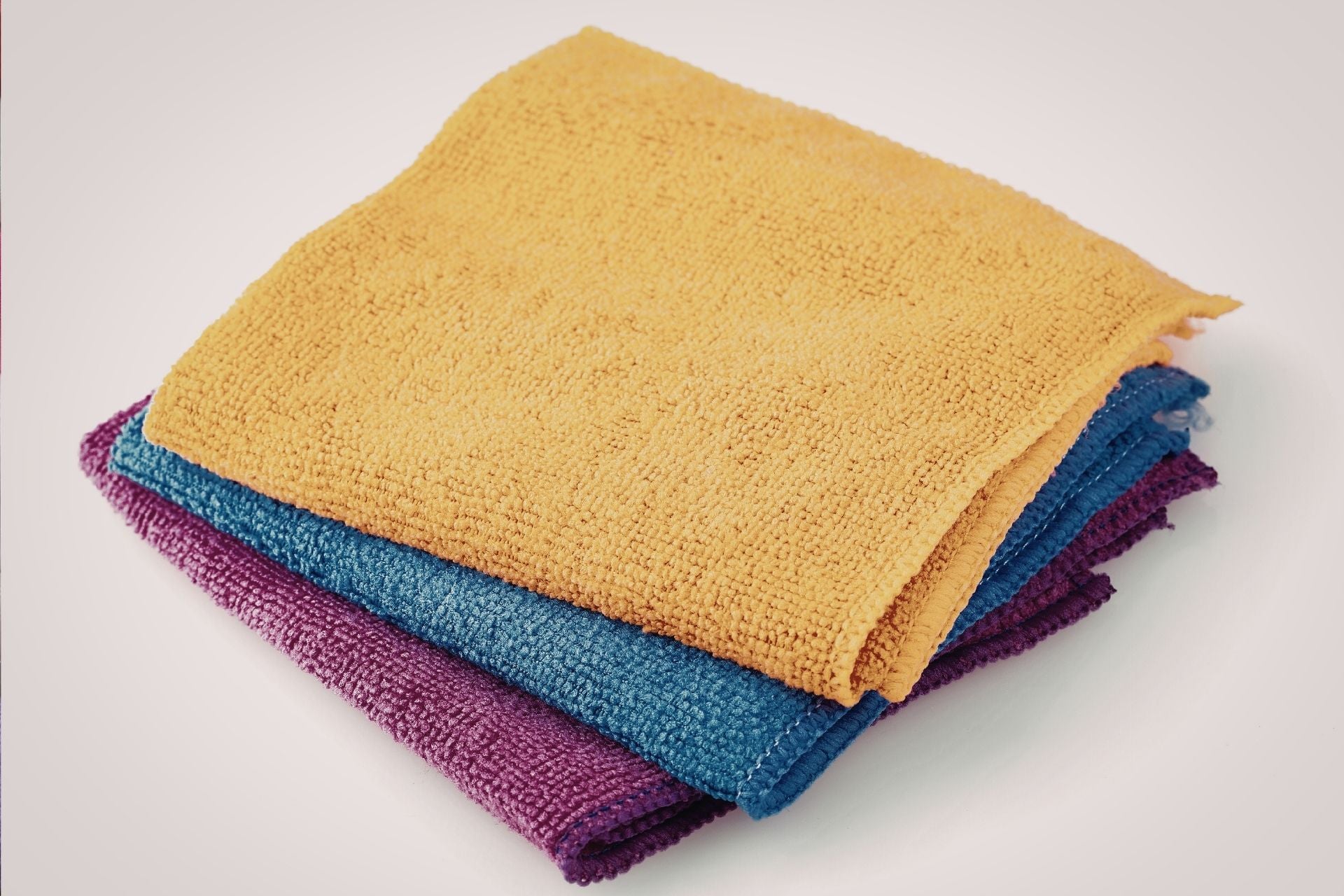
Coloured cleaning rags work well in engineering environments with multiple machines or fluid types. Assigning a specific colour to a specific machine or lubricant keeps contamination separate without requiring separate storage systems. Cotton coloured cloths start from £10 for a 5kg box.
What Cleaning Cloths Are Best for Oil and Grease Removal
Heavy cotton towelling and sweatshirt-weight recycled cloths. The looped construction on both materials holds oil rather than pushing it across the surface, which matters on heavily contaminated machinery. Lint free cloths are not necessary for oil removal and cost more than the application requires. Standard cotton towelling or sweatshirt cloths are the practical choice for most engineering and automotive cleaning tasks.
Printing Industry
Lint free. No middle ground on this one. A single fibre from a standard cotton cloth on a printing roller or plate produces a visible defect across the print run. The cost of scrapping or reworking that output is many times the saving from using a cheaper cloth.
Lint free cleaning cloths in white linen are the standard for commercial print environments. Rollers, plates, ink systems. White cloths show soiling clearly, which matters in print shops where cloth cleanliness is part of the quality control process and cloth change frequency is monitored.
Red Rose lint free linen is available in 5kg and 10kg options, made from 100% recycled linen fibre. Linen handles ink and solvent contact well without degrading quickly. Cotton can tolerate most printing solvents too, but the lint issue rules it out regardless of its chemical tolerance.
Why Do Printing Companies Need Specific Cleaning Cloths
Because a single fibre on a printing roller or plate causes a visible defect across the print run. Standard cotton cloths clean well but shed fibre as they work. In a print environment, every roller wipe is a quality risk if the cloth is not lint free. Linen removes that risk. The cost difference between lint free linen and standard cotton is small against the cost of a defective print run.
Food Processing and Production
Food environments prioritise hygiene management and surface separation above material specification. The cloth needs to be part of a colour-coded system that keeps raw protein surfaces, cooked product contact, and equipment cleaning separate. That is the fundamental requirement, and it shapes every cloth purchasing decision in a food operation.
Coloured cleaning rags in cotton handle most food production cleaning tasks. The absorbency is sufficient for standard surface wiping in food environments. The colour coding does the critical hygiene work. Cotton coloured t-shirt cloths are available from £10 for a 5kg box.
Lint free cloths are relevant in dry goods processing where fibre contamination of the product is a genuine risk. That covers a minority of food applications. For most wet production environments, colour-coded standard cotton is the more practical and cost-effective specification.
Glazing and Glass Installation
Glass does not tolerate fibre contamination. A single fibre under a sealed glazing unit, on a surface being prepared for installation, or on a panel after cleaning is a visible defect. There is no acceptable level. Lint free cleaning cloths in white linen are the only appropriate specification for glazing work.
White linen shows contamination on the cloth clearly, which matters when checking that a cloth is still clean enough to use on a finished glass panel before sealing. Red Rose white lint free linen is £13 for 5kg and £19 for 10kg, both from 100% recycled linen. For glazing operations going through significant cloth volume, buying at 10kg reduces the per-cloth cost.
Powder Coating and Aerospace
Surface preparation before powder coating needs to leave the substrate completely clean. Any contamination under the coat, including fibre, creates a defect that only becomes visible after the coating has set. Reworking a powder-coated component means stripping back the entire finish. The cloth used at the preparation stage needs to leave nothing behind.
Polishing cloths in lint free linen are the appropriate choice for pre-coat surface preparation in powder coating and aerospace component cleaning. For routine wiping during production where lint contamination is less critical, standard cotton handles the task at a lower cost per cloth.
Marine
Marine maintenance covers a wide range of tasks. Engine bay cleaning, deck surface work, lubricant and fuel contact. Most of these need absorbency over lint free performance. Heavy cotton industrial wipes handle fluid absorption and equipment cleaning in marine environments effectively, and hold up well to saltwater and marine lubricant contact without significant degradation.
At commercial marine maintenance volumes, cost per cloth matters. Recycled cotton cloths in bulk, ordered through the Red Rose wholesale programme, keep running costs manageable across a fleet or a yard with multiple vessels in simultaneous maintenance.
Why Recycled Cleaning Rags Beat Disposable Wipes Every Time