

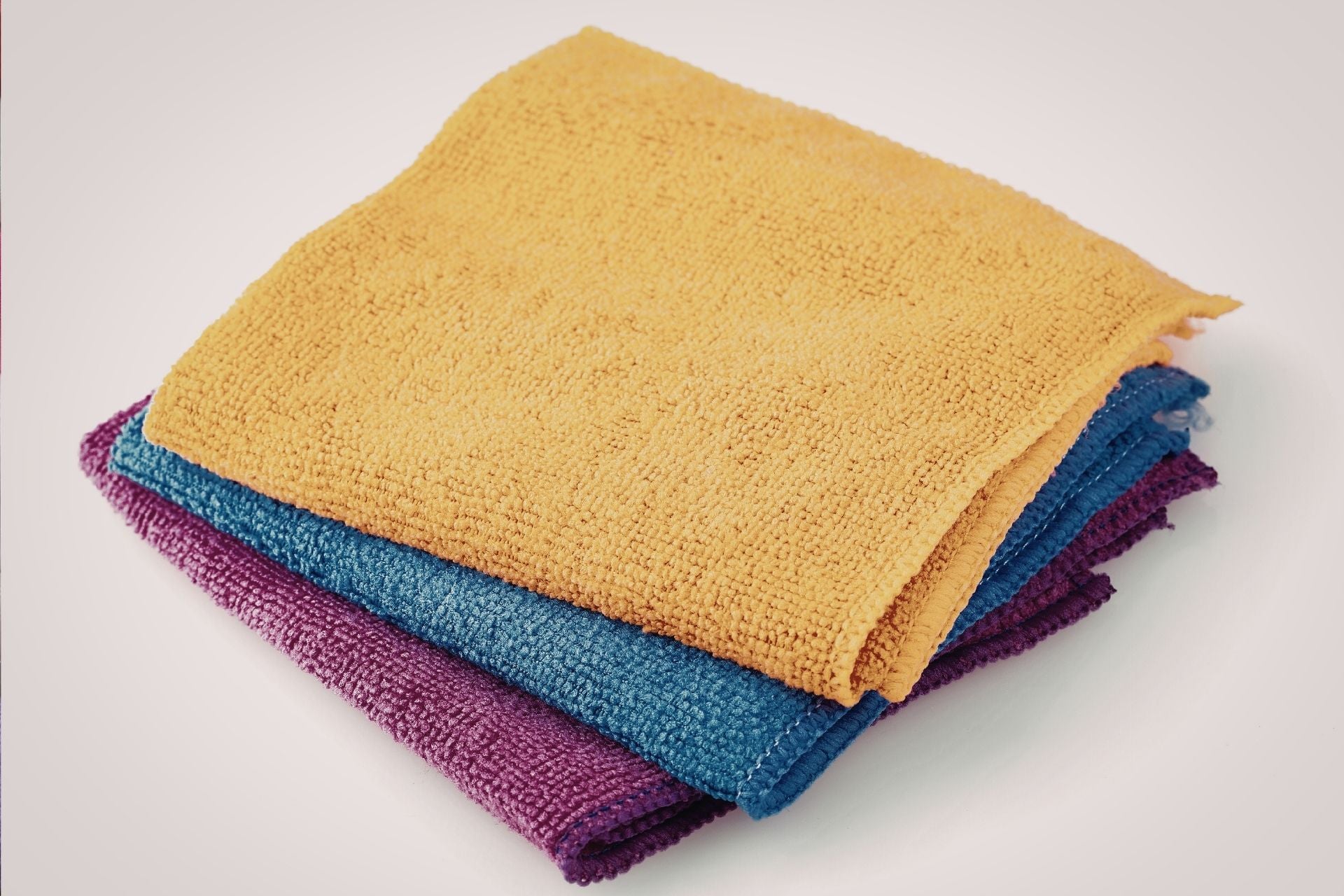
Not every cleaning application needs a lint free cloth. Paying for lint free performance in a workshop where fibre contamination is completely irrelevant is wasting money on a specification the job does not require. The applications that genuinely need lint free are specific. The reasons are worth understanding before placing an order.
What Makes a Cloth Lint Free
Lint is loose fibre released by a cloth during use. All textiles shed some fibre, but the amount varies considerably by material. Cotton, particularly in heavier or looped weights like towelling, releases more fibre than tightly woven or long-fibre materials. Linen releases very little. The fibre length and structure of linen means it holds together during wiping rather than shedding onto the work surface.
Lint free cleaning cloths in the Red Rose range are made from recycled linen fibre. The low-lint performance comes from the material itself, not a surface coating that wears off over time. White linen cloths in 5kg and 10kg packs give consistent lint free performance across repeated use.
Low-lint and lint free are not the same thing. Most cotton cloths marketed as low-lint shed noticeably less than standard towelling. Better for sensitive applications than standard cotton, yes. Equivalent to linen, no. If the application genuinely needs zero fibre contamination, linen is the specification. Not low-lint cotton.
Which Industries Need Lint Free Cleaning Cloths
Printing is the clearest case. A single cotton fibre on a printing roller or plate produces a visible defect across the print run. Commercial printers wipe down rollers, plates, and ink systems constantly, and every cloth that sheds on the equipment is a quality risk on every pass. Lint free cleaning cloths in linen are standard in commercial print. Standard cotton is not an acceptable substitute.
Glazing and glass installation work the same way. A fibre under a sealed panel is a visible defect. There is no acceptable fibre count for glazing work. Lint free is the only appropriate specification, full stop.
Powder coating and aerospace require similar standards at the surface preparation stage. Any contamination under a powder coat finish creates a defect that is only visible after the coat has set and cannot be corrected without stripping back the work. Polishing cloths in lint free linen are the appropriate choice for pre-coat surface work in these environments.
Precision engineering and optical applications follow the same logic. The test is simple: does a loose fibre on the work surface create a measurable quality failure? If yes, lint free is required. If the answer is no, it is not.
Are Lint Free Cloths Better for Polishing
Yes, for any polishing application where fibre deposits on the finished surface are a problem. Paintwork, glass, polished metal, optical components. A standard cotton cloth polishes well but deposits fibres as it works. A lint free linen cloth reaches the same result without the contamination. For rough wiping and heavy degreasing, the distinction does not matter at all.
Where Standard Cloths Are the Right Choice
General engineering and workshop cleaning. Oil removal, tool wiping, spill absorption, surface wipe-down between jobs. None of these tasks require lint free performance. What they require is absorbency and durability per wipe at a sensible cost. Cotton cleaning cloths in towelling or sweatshirt weight do all of this more cheaply than linen.
Agricultural and hydraulic engineering applications are in the same category. Heavy fluid absorption, not lint control. Standard cotton in towelling weight outperforms linen here, partly because the looped construction holds more fluid and partly because the lower cost per cloth makes frequent cloth changes practical without running up a significant bill.
Food processing sits in a more nuanced position. The priority in food environments is colour-coded hygiene management by zone and task, not lint control. Coloured cleaning rags in cotton with a proper colour system handle this effectively. Lint free cloths are relevant in dry goods processing where fibre contamination of the product is a genuine risk. That is a minority of food applications.
The Cost Difference and Whether It Matters
White lint free linen costs £13 for 5kg and £19 for 10kg. White cotton towelling cloths are £13 for 5kg. The price per kilo is comparable. The cost per wipe is similar because linen holds up well to repeated use and does not degrade quickly. The material cost difference is smaller than most people assume.
The real comparison is not cloth price. It is the cost of using the right cloth against the cost of the failure the wrong cloth causes. A print run scrapped because a roller was wiped with a shedding cotton cloth costs considerably more than any saving on cloth price. A glazing panel reworked because of fibre contamination is not a minor expense either.
For applications that do not need lint free, white cotton cleaning cloths are the better choice. Not because linen performs worse, but because paying for a specification the job does not require is not a sensible procurement decision.
What Your Industrial Cleaning Cloths Are Actually Made From
Why Recycled Cleaning Rags Beat Disposable Wipes Every Time